The Smoke Free Homes challenge was adapted from the previous UK and Irish challenges for the Northeast Inner City (NEIC) Network. It was designed at encouraging households to make their homes and cars smoke-free environments. The challenge aimed to create healthier environments over a one-month period, reduce the exposure to second-hand smoke, and support smokers in taking a step towards quitting.
It was implemented in Dublin’s NEIC, an area with diverse communities and high deprivation levels, by Sonia McDermott, Health Promotion and Improvement Officer, and Ultan Devery, Stop Smoking Advisor. In the NEIC, several areas are classified as disadvantaged, facing unemployment, low levels of education, and health inequalities. Given the high smoking rates, this initiative sought to address a significant public health concern.
Project Aim
The project aimed to promote smoke-free environments, particularly in homes with children. By increasing awareness of the risks of indoor smoking and vaping. It also encouraged families to make public pledges and take tangible actions to protect household members from second-hand smoke exposure.
Methodology/Approach
The campaign involved two key components:
- Poster Competition:
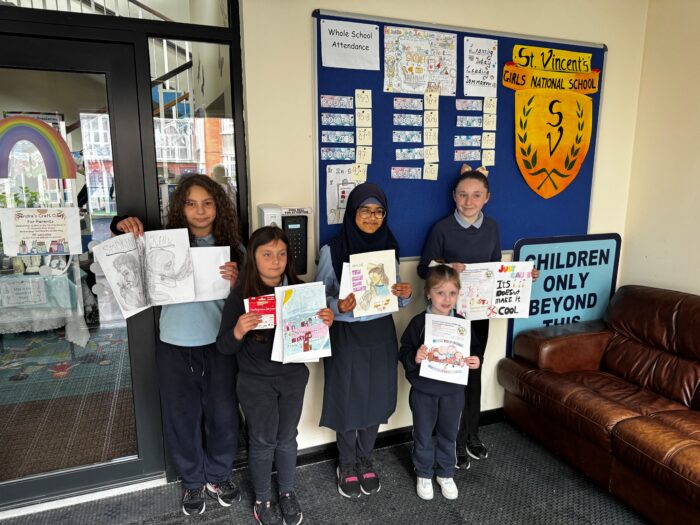
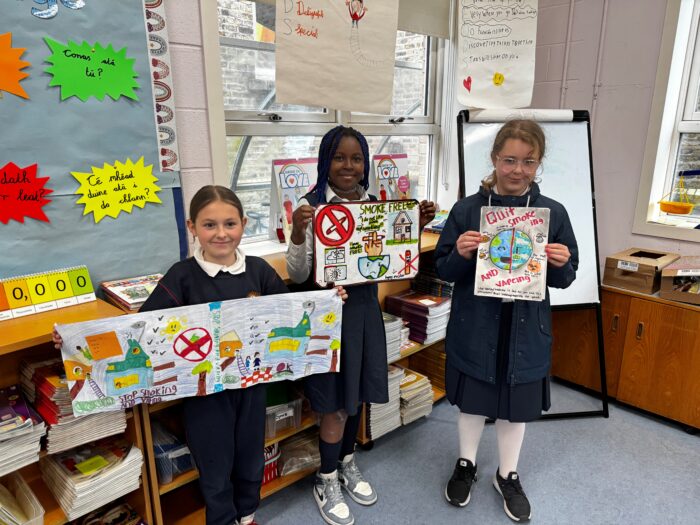
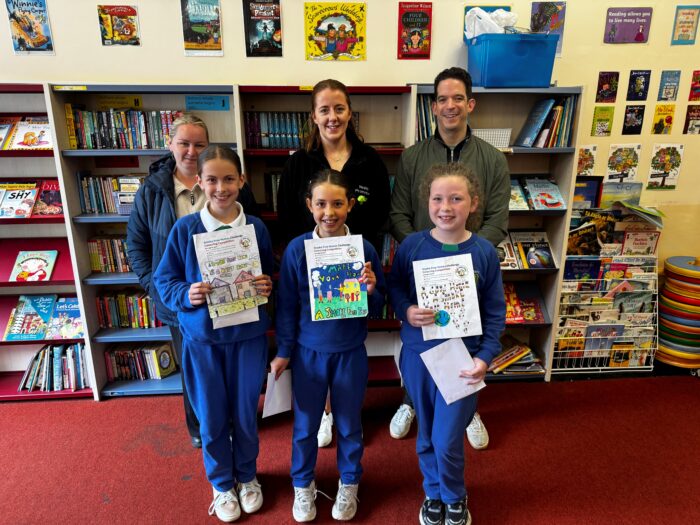
In collaboration with the HSE, local schools, and community partners, children were invited to design posters representing a ‘Smoke Free Home’. Winning entries were showcased in campaign materials, providing a creative and engaging visual element.
- Smoke-Free Homes Challenge:
Households were invited to sign up for the challenge, selecting between three and ten positive smoke-free changes to adopt over four weeks. While complete smoke-free status was encouraged, it was not a requirement for participation. Weekly support packs delivered by post or digitally guided households through their commitment. A celebration event recognised participating households, and winners received vouchers in appreciation of their efforts.
Change/intervention implemented
In the NEIC, Health Community Workers played a vital role in implementing the programme on the ground, supporting recruitment, maintaining engagement, and distributing materials. The project was community-led and collaborative, with schools, parents, and health professionals contributing to its delivery and success.
Measurement & Evaluation
Describe the metrics, data collection methods, or tools used to assess the impact of the intervention.
Campaign metrics included:
– Poster Competition (2025): 300
– Smoke Free Homes Challenge (2025): 104
Data was gathered through sign-up forms, feedback surveys, and post-challenge evaluation.
Results
The 2025 challenge showed increased participation and positive household engagement compared to 2024. Feedback highlighted the value of school involvement in engaging families, and many participants described the challenge as a practical and supportive step towards healthier home environments.
Impact on patients, staff or service
Families reported greater awareness of second-hand smoke risks and felt empowered to implement health-promoting changes. School staff found the poster competition a valuable tool for education and engagement, while health workers noted increased interest in smoking cessation supports.
Sustainability & Future Plans
The programme campaign is designed for replication and scaling. Ongoing engagement with schools and community organisations, combined with low-cost materials and peer support, makes the model sustainable. Plans for 2026 include a digital sign-up option and expanded outreach through housing networks and social media.